


Love vs. Survival: When Two Worlds Meet in Relationship
- trinaleespeaks
- Jul 25, 2025
- 3 min read

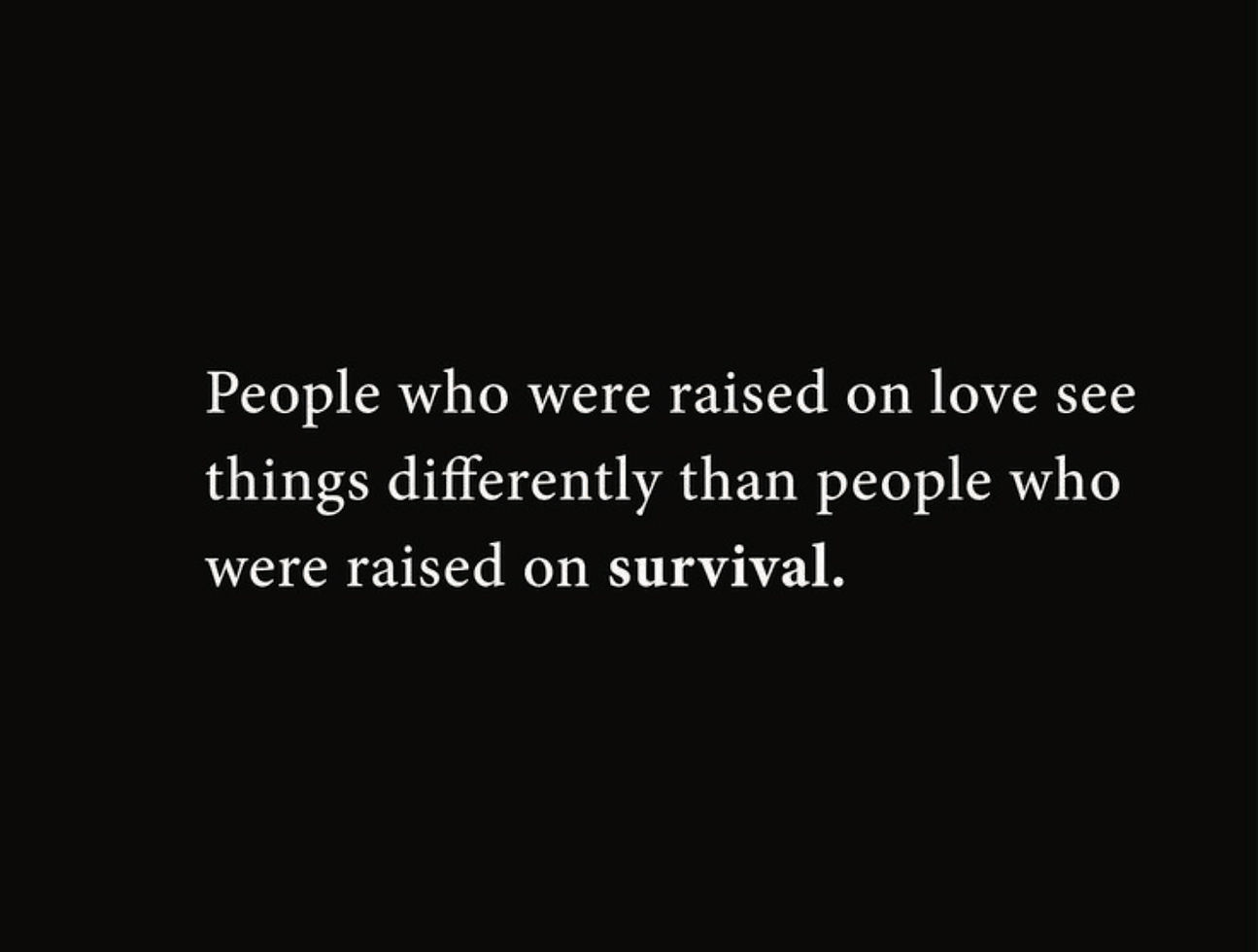
Not everyone was raised the same way.
Some of us were raised on love. We knew warmth, safety, emotional attunement. We were allowed to cry and be comforted. We were taught that our needs mattered and our voice had value.
Others of us were raised on survival. We knew chaos, silence, or abandonment. We learned to be hyperaware, quiet, strong, invisible. We adapted by becoming caretakers, overachievers, or emotionally unavailable—not because we wanted to, but because we had to.
And sometimes… those two people fall in love.
🩶 When Survival Meets Love
It can be beautiful.
But it can also be incredibly hard.
Because the person raised on love doesn’t always understand why their partner:
Shuts down instead of opens up
Flinches at softness or kindness
Feels unworthy of peace, safety, or affection
And the person raised on survival may not understand why their partner:
Needs emotional closeness to feel safe
Gets confused when they detach or go silent
Seems “too sensitive” or “too open”
They speak different love languages, shaped not by preference but by upbringing.
🌬️ The Person Raised on Survival Might Say:
“I don’t know how to let people in.”
“Why do I always feel like I’m waiting for the other shoe to drop?”
“Being vulnerable feels like danger, not intimacy.”
🌞 The Person Raised on Love Might Say:
“Why do you pull away when I get close?”
“I want to help, but I don’t know how to reach you.”
“I’m not used to love feeling like a battle.”
💡 So How Can They Love Each Other?
1.Understand, Don’t Pathologize
The person who grew up in survival mode is not “broken.”
They adapted to unsafe environments with brilliant survival strategies.
But love is not war, and what protected them before can now feel like walls.
The person raised on love is not “naive.”
They simply grew up with a baseline of safety, which should be normal—not rare.
Understanding each other’s nervous systems is key.
Hold Space for Each Other’s Triggers
If one partner goes silent, it might be protection—not punishment.
If one partner wants to talk everything out, it might be connection—not control.
Learn to ask:
“What does love feel like to you?”
“What did you learn about safety growing up?”
“What’s something I can do to help you feel more secure?”
3.Don’t Confuse Peace with Boredom
For the one raised on survival, peace might feel… strange. Empty. Suspicious.
But peace is not the absence of love—it’s the soil where love grows.
Let softness feel awkward at first. Let safety feel new. Let quiet love build trust over time.
4.Practice Reparenting in Relationship
Relationships can be healing when we:
Name our patterns with compassion, not shame
Learn each other’s emotional blueprints
Offer what we never received—with patience
The person raised on love can teach gentleness.
The person raised on survival can teach resilience.
Together, they can create something neither experienced before: a new kind of love, rooted in awareness and growth.
🕊️ Final Thoughts
Love is not about being the same. It’s about being willing.
Willing to learn, to grow, to unlearn.
Willing to soften your edges and hold someone else’s.
Willing to offer the kind of love you never received—and receive the kind of love you never knew how to accept.
Because when love meets survival, it doesn’t have to end in heartbreak.
It can become a bridge.
A balm.
A beginning.

Comments